Pages

Tuesday, March 27, 2012

Mary Lou Emery's Views on Jean Rhys

In her literary criticism "Modern Crosscurrents," Mary Lou Emery investigates Jean Rhys as a writer and how her identity could have translated into her writings.

Emery identifies Rhys as a female, West Indian writer who does her work under the influence of European modernism; she sees Rhys participation in literary movements with such larger social contexts as very influential. In her analysis, Emery considers two approaches. The first approach considers European literary ideas of “character” and “self.” The second approach considers how Rhys’ ideologies built from identity can be conflicting and at the same time critical of the “colonizing countries’ concepts and values even if governed by them.”


Emery believes that Jean Rhys’ life experiences, “her upbringing in Domenica, various jobs in England with traveling theatrical companies followed by a disastrous love affair, a marriage, and a period spent wandering in Europe,” were very impactful of the novel. Rhys was often described as an “outsider among outsiders,” as a female writer and living in a world dominated by men. Rhys was married three times, gave birth to two children, and struggled with alcohol dependence among other social issues. She became marginalized.


How do you think these issues show up in “Wide Sargasso Sea”?

A Shift in Power in the Wide Sargasso Sea


When beginning this novel, I found myself struggling. I could not emerge myself into the story. All the notes on the bottom of the pages, I felt as though I was reading two separate novels; one fictional and the other non-fictional. Once I got the hang of the structure of this novel I really got into it. The first theme I picked up on was the transition of power. From the abolishment of slavery both whites and blacks are recreating their identities in this new world. Many whites are going from being wealthy to living an impoverished life. Whites in Dominica are not only dealing with impoverishment in the economic standards but also in a loss of power. During part one, Antoinette runs into many characters who do not like her because of the color of her skin. One little girl sings a song to Antoinette as she walks down the street, “Go away white cockroach, go away, go away. White cockroach, go away, go away. Nobody want you. Go away” (13). The interesting dynamic  in this novel is that Antoinette was not alive while slavery was still legally allowed, but she is paying for the actions of her ancestors because of the color of her skin. The same way slaves were forced into to slavery because of the color of their skin. The thriving of power and identity is coming full circle during the beginning of the novel. There is also a part in the novel where Antoinette is playing with her friend Tia and they get into an argument about money, “Keep them then, you cheating nigger...That’s not what she hear, she said. She hear all we poor like beggar… Old time white people nothing but white nigger now, and black nigger better than white nigger” (14). This quote really highlights the shift in power, not exactly from white to black but definitely out of the white people’s hands. It also shows the consiquences of slavery not only for blacks but also for whites. There is a desperate feeling of trying to create an identity where one was lost.

Feelings of Power


     There are various groups of people in the first part of the book that hold different amounts of power.  That power is based off of beliefs and the background of the people.    Annette, Mr. Mason, Christophine and the workers on the estate all have their own forms of power over themselves and others.  At first Antoinette’s childhood is simple and she feels at home even though she is the only white child in the area.  She feels equal until her encounter with the black girl on page 6. “One day a little girl followed me singing, ‘Go away white cockroach, go away, go away‘ I walked fast but she walked faster, ‘White cockroach go away, go away, go away’.”  After this Antoinette runs home and hides until Chistophine finds her.  The other girl feels a sense of power over Antoinette, even though she is part of the “elite” she knows the strength of her people and how their numbers are greater.  Mr. Mason feels that he has power over the workers due to his status and how he views the workers.  “They are curious. It’s natural enough.  You have lived alone far too long, Annette. You imagine enmity which doesn’t exist.  Always one extreme or the other.” - “They’re too damn lazy to be dangerous”.  Mr. Mason underestimates the workers and that gives him a sense of power, thinking they could not be a danger to him.  The workers also feel a sense of power as they gather to burn the house.  They have the numbers advantage and the they have been insulted by Mr. Mason so they are spurred into action.  The power remains with them until the parrot dies and Christophine comes out, then the power has shifted to the Obeah and superstition.  “I heard someone say something about bad luck and remembered that it was very unlucky t o kill a parrot, or even to see a parrot die. They began to go then, quickly, silently, and those  that were left drew aside and watched us as we trailed across the grass. They were not laughing any more.”  The various characters in the book move in and out of power positions due to their actions and how they view themselves at the time.  When a character feels like they hold power, like Mr. Mason, they act on it and whether or not they do hold power is irrelevant, as they spur another group into response.  That group or person may or may not affect the balance of power but since they are affected by it, it alters their view and changes how the power is viewed.  I found a link to a website that looks at some of the themes of power in The Wide Sargasso Sea as well, http://www.shmoop.com/wide-sargasso-sea/power-theme.html.

Monday, March 26, 2012

A Sexual Revolution in Red Patent Leather Shoes

It's old news, but today I discovered an article about Aliaa Elmahdy's photographic protest. I thought it would spark some relevant discussion because Elmahdy used an internet blog as a tool for global communication and social protest, and her description of social structures in Egypt reminded me of the oppression we studied in Tagore's The Home and the World.

Aliaa Elmahdy posted a nude photograph on her blog- wearing only sheer, thigh-high tights and red patent leather shoes. Her explanation for publicizing the photo on her blog and other social forums like Twitter and Facebook, was:
Put on trial the artists’ models who posed nude for art schools until the early 70s, hide the art books and destroy the nude statues of antiquity, then undress and stand before a mirror and burn your bodies that you despise to forever rid yourselves of your sexual hangups before you direct your humiliation and chauvinism and dare to try to deny me my freedom of expression.
In a CNN interview published in 2011, she also states that "Most Egyptians are secretive about sex because they are brought up thinking sex is something bad and dirty and there is no mention of it in schools. Sex to the majority is simply a man using a woman with no communication between them and children are just part of an equation. To me, sex is an expression of respect, a passion for love that culminates into sex to please both sides." Elmahdy speaks openly about her relationship with boyfriend Kareem, her use of sexual protection, and her adoration for the female body as aesthetically beautiful.

In another article, Chris Monty writes that "Nudity is looked down upon in Egyptian society, even as a form of art. Elmahdy’s posting is almost unheard of in a country where most women in the Muslim majority wear a headscarf and rarely wear clothes exposing the arms or legs in public." Elmahdy expresses distaste for the veil, which she says some Egyptian women wear merely to escape the public backlash and harassment that would ensue if they shed it. She is living in a time of conservatism and female oppression. The SCAF responded to a political protest in Tahrir by giving the women activists virginity tests- thrusting two fingers into their private areas.

What do you think of Elmahdy's decision to pose nude?
How do you think this Egyptian news compares to Bimala's revolution in the Indian novel The Home and the World?
Also, we use this blog as an educational tool to discuss class readings. What do you think of Elmahdy's use of the internet to achieve global media coverage and garner support?

The Peppered Moth and Fordlandia: Matacao in Real Life?

I loved the way that environmental issues were presented using magical realism in Through the Arc of the Rain Forest. In the middle of the book, the ball in front of Kazumasa Ishimaru's head was describing that "what was most interesting about the discovery of the rain forest parking lot  was the way in which nature had moved to accommodate and make use of it" (100). The grotesque deformities of the animals that had inhabited this particular section of the rain forest were over-exaggerated and unrealistic, but they somehow captured the mood of what is actually taking place in the Amazon, and other environmental areas being effected by industrialization and cultivation. He describes how "the entomologists were shocked to discover that their rare butterfly only rested in the vinyl seats of Fords and Chevrolets and that their exquisite reddish coloring was actually due to a steady diet of hydrated ferric oxide, or rusty water" (100). Ew. He then goes on to describe a new species of mice. "These mice had developed suction cups on their feet that allowed them to crawl up the slippery sides and bottoms of the aircraft and cars" (100). This wouldn't actually happen to mice in the real world (or at least not anytime soon I hope) but there have been famous cases in the past where animals have been forced to genetically change to adapt to the quickly-changing environment caused by humans. I think the most famous example that most of us learned in school alongside our basic studies of the Industrial Revolution was the evolution of the peppered moth. Here is a short video that quickly explains this evolution.


Although this was recently scientifically proven to be false (apparently there were already variations in the color of this moth prior to the industrial revolution), I think that a similar issue is of concern to Yamashita and she does a brilliant job of expressing that concern using magical realism.

For those of you who are interested in the environmental history of the rainforest, I highly suggest (if you haven't already) looking into Fordlandia. Fordlandia was a suburban town created by the Ford Motor Company in the beginning of the 21st century to house Ford workers in the Amazon. The company was tired of paying for over-priced rubber through Great Britain, so Henry Ford decided to grow his own rubber in the Amazon. His company burnt acres and acres of trees down to make room for new rubber trees. However, Ford's limited knowledge of how to actually grow rubber and his stubborn refusal to seek professional help contributed to the downfall of Fordlandia (not to mention the disease, starvation, and clashes with the native people). Traces of Fordlandia are still left behind. Buildings, water towers, mailboxes, and fire hydrants are now overgrown. Yamashita's description of the "rain forest parking lot" is considerably similar to the actual remnants of Fordlandia (100). Here's a link to a brief description of Fordlandia and what it looks like today. http://www.npr.org/templates/story/story.php?storyId=105068620.

Sunday, March 25, 2012

The Only Warmth She Knows in England

Rochester’s viewpoint of Antoinette’s homeland is drastically different from her own narrative.  As he stares at Amelie, Rochester reflects: "A lovely little creature but sly, spiteful, malignant perhaps, like much else in this place" (65). The sea creeps "stealthily forwards and backwards," Antoinette's eyes are "long, sad, dark alien eyes," and the "rain began to drop down the back of [Rochester's] neck adding to [his] feeling of discomfort and melancholy" (66-67). He is a spectator looking in, and he is consistently uncomfortable and intimidated by Antoinette’s world. "Everything is too much, I felt as I rode wearily after her. Too much blue, too much purple, too much green. The flowers too red, the mountains too high, the hills too near. And the woman is a stranger" (70). 

In contrast, Antoinette’s descriptions of the Caribbean are full of admiration for its untamed life. She describes her garden as “large and beautiful as that garden in the Bible- the tree of life grew there. But it had gone wild. The paths were overgrown…Orchids flourished out of reach or for some reason not to be touched. One was snaky looking, another like an octopus with long thin brown tentacles…” (19). She speaks of bathing pools, eating with her fingers, and lying half-awake from the stimulation of the world around her. She feels safe in the protecting arms of the cliffs, high mountains, and sea. Even when her house is torched and Aunt Cora shields her eyes from the burning image of the parrot alight, she does not feel contempt for her homeland. “Nothing would be left, the golden ferns and the silver ferns, the orchids, the ginger lilies and the roses, the rocking-chairs and the blue sofa, the jasmine and the honeysuckle, and the picture of the Miller’s Daughter” (45). She feels remorse for the loss of so many beautiful things. 

In her article, "And it Kept its Secret: Narration, Memory,and Madness in Jean Rhys' Wide Sargasso Sea” Kathy Mezei theorizes that at the core of Antoinette's first person narrative is the secret that she is telling her story in order to resist madness. "By her act of narration, she retains her tenuous fragile hold on sanity, on life itself, since to narrate is to live, to order a life, to 'make sense' out of it...Antoinette survives only as long as she creates narratives" (197). Her urgent need to preserve her memories is most prevalent in lapses into the present tense. Mezei uses the example of Antoinette saying: "Quickly while I can, I must remember the hot classroom" (53). She is afraid that she is losing her mind, forgetting. Mezei’s article may provide some explanation for Antoinette’s descriptions- dripping with color, nostalgia, and love. She is trying to recreate her home in the cold, dark attic in England where she is slipping into madness propelled by her ostracism. Rhys writes that there must be a “reason why [Antoinette] tries to set everything on fire, and eventually succeeds. (Personally, I think that one is simple. She is cold- and fire is the only warmth she knows in England)" (Letters, p. 157).

Friday, March 23, 2012

Through the Destiny of the Rain Forest


There’s a philosophical theory Causal Determinism which argues that every action that ever occurs is part of a long, unbroken chain of events that dates back to the dawn of time.  Every action and event which takes place causes another action or event to occur, creating a self-sustaining sequence with no beginning or end.  In this way, the theory claims every action that occurs is in fact destined to occur, since it is all part of the same inescapable chain of events.
One action always seems to lead to another
I bring all this up to frame and highlight the strong sense of destiny that permeates Through the Arc of the Rain Forest.  At times, it seems almost certain that the characters are not in control of their own fate; that they are instead being guided by some overarching sense of destiny.  Kazumasa’s Nigh-Omniscient Ball even says as much as early as page 15: “Kazumasa at the time had no idea how this simple pastime…might affect his own future.  These things I knew through simple clairvoyance…strange events far to our north…events as insignificant as those in tiny northeastern coastal town…and events as prestigious as those of the great economic capital of the world, New York, would each cast forth and invisible line, shall I say, leading us to a place they would all call the Matacao.”
All throughout the book, however, there are clear signs of destiny pulling the characters one way or the other.  Batista’s prophetic pigeon messages are a chief example: he claims to never know how he comes up with them, only that they suddenly flow from his pen almost without his consent.  And yet he predicts Kazumasa’s great fortunes, the death of Brazil’s birds and even the return of his wife.  Meanwhile, Chico Paco envisions Rubens long before Lourdes asks for his assistance.   Chico Paco takes this to be a sign from God himself, and really, who is anyone to argue that it’s not?
And then there are the countless smaller events in the novel that seem too amazing to pass off as coincidence.  That Kazumasa, the only person on Earth who could possibly discover new sources of Matacao, would end up the primary shareholder of the corporation that utilizes it.  That Gilberto would miraculously be cured, which in turn would cause his friend to make the pilgrimage that would give him international fame.  All this seems to fit too perfectly together for it to e simple coincidence.
Casual Determinism claims that we lack any free will; that we’re locked into our course by a never-ending chain of actions and reactions that have been destined since the dawn of time.  Whether or not this applies to our world is a matter of debate, but it’s not hard to imagine such a theory holding weight in the magic-realist world of Through the Arc of the Rain Forest.

Utopia becoming a Dystopia


Sorry for my two posts to be out of order, I needed to get them posted.
During Voltaires Candide, Eldorado and the idea of a utopia is brought into the novel.  This idea of a perfect society is nothing new to the literary world.  The idea is brought up in several different novels, always with a different twist to make it unique.  The first novel that came to my mind of a utopian society was The Giver by Lois Lowry.  In The Giver, all the bad of society such as pain, war and death are removed.  No longer is the idea of failure or hunger, simple things all humans feel, apart of this society.  It is impossible for these things to exist because simply the possibility of them has been removed.  Children are born by birthmothers and are given to families that are put together after society decides that are compatible.  Children that aren’t perfect, and don’t get a family and old people, are then “released” which is like death, but never said it is death, because the society is too perfect for this to happen.  Jonas, receives the job of the receiver, where all the memories that have been wrong and caused imperfection are put on him, only he can feel and remember, so those mistakes are never made again.  Jonas realizes, this world without feeling, isn’t worth the misery of not knowing the joys that the painful real world can bring. Is this Utopian society even possible?  Its realized that its a dystopian society eventually, that all the perfect in the world will eventually bring imperfection.  In Candide, while in Eldorado and getting ready to leave, the King tells them that he will have his people build them something to travel in on their journey.  “When you have been conveyed to the other side of the mountains, no one may accompany you further; for my subjects have vowed never to set foot beyond our borders, and they are too wise to break the oath.”  Is a society that is perfect and without harm or distaste, not a free society?  Can this Utopian society be achieved without taking away some of the most important attributes to people?  It sounds through the words of the King that fear is evoked in the people in order for them not to leave.  I think most literature has shown that Utopia is not possible, without losing what is most important and needed in a society.  I included a link to The Giver on Wikipedia just for a full description of the book, the one given is a good one.     http://en.wikipedia.org/wiki/The_Giver

Faust and a Strive for Perfection


Last semester, I had to take a music theatre class to fill a requirement.  I have always been interested in singing and am actually trained in jazz and operatic styles of singing.  I chose to take a class in Music theatre until the early 1900’s, which ended up being one of the worst mistakes, ever.  I watched tons of Operas that I had no care for watching, that took up about 6 hours a week to finish the whole thing.  I did though, come across Faust, while I was watching the many, many hours of Opera.  I could go into detail about the ballet that was a part of the show, or the fluidity of the music, but I won’t, because it is all very boring.  I probably wouldn’t have remembered the opera, had it none been my favorite of the ones I was forced to watch.  Never did I think I would come back in contact with Faust, but here I am, with book in hand.  I found that having seen the opera helped a great deal in understanding the book.  Obviously, opera is all singing, and wonderfully enough, the version of Faust I watched was all in French, so I really had to pay attention to pass the test I had to take about it.  Having the words in the book, and then being able to imagine the scenery from the film, really helped me understand.  The end scene, when Gretchen is in jail, is probably the scene that stuck in my memory, because it seems that every selling of the soul to the devil story ends this way.  The devil always wins, and the happiness that was once promised to the person, Faust, is taken so abruptly from them.  I think its no surprise that this story is still performed so often in theatre today, the story of eternal happiness at any cost is something that I think will always interest humans.  Is it ever really worth it though?  This is something that like a utopia has proved to be the opposite.  I think through all these books that we have read, one main theme has been present throughout.  We continue to strive for a perfect society, and perfect happiness, but what is actually the cost for all this?  Through all the examples we've had this idea of perfect, isn't actually achievable, because with all this promise for perfection, something is bound to go wrong.  The price paid is never actually worth this "perfect" that is guaranteed.  Yet we continue to watch, and read, things that promise this perfect happiness or society, to forever strive for what we want.

A False Sense of Hope


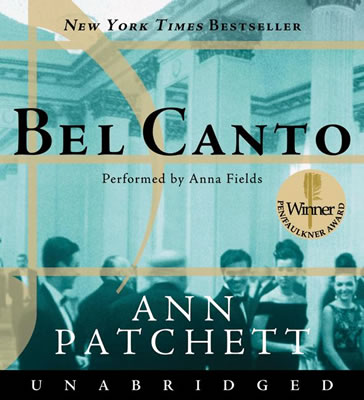
        The ending of Through the Arc of the Rainforest comes out of nowhere, after building up hope for most of the book the ending is a shock.  When the true nature of Matacao is revealed and starts to fall apart the “perfect world” that had started to form falls apart very quickly.  Bel Canto had a very similar feeling throughout, a sense of hope that builds up until the final few pages of the novel, when it all comes crashing down.  (Here’s a link to the wikipedia page, with a plot summary) http://en.wikipedia.org/wiki/Bel_Canto_(novel) Bel Canto takes place in a fictional South American country, where a government function is attacked by rebel forces in the country.  The rebels goal was to take the president hostage, but he missed the event, leaving the rebels with a group of less important hostages.  The standoff between rebel forces in the building and police outside goes on for weeks.  Inside, the plot focuses on character development between some of the hostages and the rebels, who start to bond during their captivity.  Relationships form and there is a sense that these people could live happy lives with each other outside of the hostage situation.  Oh right, a hostage situation, that slips to the back of your mind as the characters grow on you and then out of nowhere the police forces storm the building.  In the space of a few pages all of the rebels and a number of the hostages are killed, characters you have been hoping can have a future together are torn apart in seconds and in the aftermath only a handful of hostages are left.  I had the same feeling of shock reading Through the Arc of the Rainforest.  “The Matacao, too, was slowly but definitely corroding, as was everything else made of Matacao plastic.  Buildings were condemned.  Entire roads and bridges were blocked off.  Innocent people were caught unaware - killed or injured by falling chunks of the stuff.  People who stepped out in the most elegant finery made of Matacao plastic were horrified to find themselves naked at cocktail parties, undressed at presidential receptions.  Cars crumbled at stop lights.  Computer monitors sagged into their CPUs.  The credit card industry went into a panic.”   Reading this passage and seeing how quickly the world was collapsing had that same feeling of shock that I felt in Bel Canto.  I remember my english class in high school hating the ending of Bel Canto, the fact that their favorite characters died.  I loved the ending, the emotions it brought forth and the surprise that it caused.  It made the entire book much more powerful and Through the Arc of the Rainforest had that same power behind it, which helps the overall message about the destruction of the rainforest.  If the book had continued to be happy and show a world benefiting from Matacao, it would not be memorable, it would be a fun story with quirky characters but it would not be memorable.  The power this ending provides is crucial to the message and I can not imagine it ending any other way.    

Matacao, Ignorance, and Bigfoot

I touched on this in class, but I want to elaborate about how significant I think the eventual reveal of the truth behind Matacao actually is.

On page 202, right at the beginning of Chapter 30. That's where we get the reveal for Matacao, and it's more or less a throwaway section. No big build up, no huge public reveal. Just an acknowledgement of what scientists had figured out. Quiet. Discreet. Probably largely unnoticed by the masses. In fact, I would argue that in the world of Through The Arc of the Rain Forest, most probably went right on with wild speculations despite a logical conclusion being reached. It's noted that "As for Matacao itself, so-called Matacao plastic conservationists ran all over it, tearfully trying to find a solution for the preservation of this contemporary geological and, many insisted, spiritual miracle" (Yamashita 207).

Well color me surprised. Human beings choose to stick with a more fantastical, unfounded claim rather than accept what science has already proven to the be the truth? I bet that's never happened before.

Through The Arc of the Rain Forest provides a well constructed illustration of mankind's inability to separate themselves from their delusions. Even in the face of overwhelming evidence, MANY still choose to believe what they want to believe--simply because they can. It's this pattern that still leads to speculation about crop circles. Or people refusing to acknowledge the Theory of Evolution. Or bigfoot.

Matacao's eventual scientific reveal plays in to this idea. It's written in the book almost as an afterthought, as if to acknowledge that in the realm of the novel it would be ignored by many. This happens all too often in our own world as well. Crazy conspiracy theories, vivid fantasies and rampant false ideas are publicized while the actual, proven scientific truth is received with little fanfare or acknowledgement. People love their fantasies, love what makes them wonder or feel comfortable.

For many in the novel Matacao represented a kind of promised land, and they didn't want to let go of that. Even if it killed them.

Monday, March 19, 2012

Forever young


“Chico Pico would forever even if he grew up to be a very old man and decrepit man, be the boyish young angel of everyone’s dream pilgrimage”( Yamashita 163).  My favorite character in the book is Chico Pico because he is the one I identify with the most. Not necessarily in terms of his journey to Matacao but rather the way in which a majority of Brazilian see and worship him. Chico Pico’s, symbolic significance to the people of Brazil, reminds me of my attitude towards my favorite child stars from the TV. shows I used  to watch when I was younger.  

Childhood, for most people myself included, is a period in life where everything imaginable is possible and every moment of the day was full of adventure. To coincide with that, most tv shows targeting an audience of a younger age group, always have characters who have an endless zeal for life and are very adventurous. Sooner or later, adulthood hits and one is plagued with responsibilities which does not always make way daily adventures and forces one to be more realistic about goals and dreams. Chico Pico, is a symbol of hope for a people living in a country in whose government is run-down and limited resources makes attaining even the simple goals very difficult. For a moment, their lives are improved with the introduction of plastic and feathers but that it is only short-lived. They are now plagued with incurable diseases and death. In response to the going in their lives, they cling on to hope by hero worshipping Chico Pico.  Similarly, the allure adulthood with its promise of freedom and control over one’s own life usually overshadows the annoying aspect living a routine based life and having to do task that are “not fun”.

 To combat this, there are actors or characters from childhood tv show or books, that I to me will always their cute/awesome childish selves. My refusal to believe that most of these actors or characters  are growing up or evolving just as I am to simply a way for me to hold on to bliss of my childhood. By forever keeping them, in the 5-12 years version of themselves in my mind, I can always re-live my childhood at any given time. But more importantly, that mental frame of them continues to fuel my sense of adventure and belief in endless possibilities in life. Even in moments of life when it is difficult to believe in anything or worse adventures barely possible.


Faust: Love and devotion.

To say that Von Geothe’s version of Faust was an easy read and easily understood would be a straight up lie. However, it can be inferred that one of question being asked by Von Goethe is Does love really conquer all?  

  On the surface, it seems like the life of Faust is simply a tragic story. However, Von Goethe uses the story to show the crippling effect that extreme love and devotion to one thing can have on an individual’s life.  Faust’s first love is learning and it is to which he initially dedicates a chuck of his life to.  His devotion to knowledge leads to him being locked up in dark rooms or libraries for long periods of time. Faust has limited contact with others beyond his students and his assistant Wagner. Learning takes over his life to the point where he barely goes out even into the sun.  This unhealthy way of living becomes a danger to his well-being and overall sanity. The devotion of obtaining knowledge entraps him in a world where all the matters is becoming an expert in a subject(s). The members of this community are limited in their definition of happiness and cannot even enjoy other things in life beyond books.  The love of knowledge and the devotion to acquiring knowledge leaves him unhappy and restless.

 When he meets and falls in love with Gretchen, it believed that Faust will finally be complete and happy. However, his devotion to this love proves fatal and disastrous. He becomes so consumed with her that he devotes all his effort into spending time with her. In order to avoid interruptions, he provides a sleeping portion to be administered to Gretchen mother. She is accidently overdosed and dies. Also his love for Gretchen leads to a pregnancy which in the end destroys her life. She is imprisoned and finally loses her mind after her child is taken from her. It is not his love for her which is at fault but rather his complete devotion to her. Just like he spent all his time acquiring knowledge at the risk of his own health, he puts all his efforts into spending time with Gretchen. He does not associate with others expect her.

 Von Goethe wants to caution his audience and preach the need for balance in love and devotion. Devotion is necessary in attaining goals and maintaining relationship however it is best done in moderation. Also a degree of love for one thing or person should not overshadow that of others.  But rather to achieve balance, other people or things should also be given attention to.

Friday, March 16, 2012

Defining Magic Realism with Through the Arc of the Rain Forest


            One of the reasons why I took to Through the Arc of the Rain Forest so quickly is that I’ve been a huge fan of the Magic Realism genre.  The blurring of the lines between rational and the fantastical always struck me as one of the most jarring and engrossing forms of literature.  To this day, the collection of Gabriel Garcia Marquez short stories I found in my freshman year of high-school is the book I most often go back to.
            So, one of the things I always found difficult was trying to pin down precisely what Magic Realism was.  It sounds like a simple question, but the very nature of the genre makes a definition elusive.  It’s hard to specify what does and does not fit into a literary style that focuses on blurring the borders that typically stand up between genres; how much fantasy is required?  How much is too much?  Is there even a divide?  Novelist Terry Prachet once went as far as saying magic realism “is like a polite way of saying to write fantasy.”
            I bring all this up because I believe that Through the Arc of the Rain Forest goes a long way towards clarifying this chaos.  It embodies most of the unique characteristics that make Magical Realism stand out on its own as a genre.  First of all, the fantastical elements aren’t merely there; they’re included for precise reasons.  They represent deeper meaning about the world that the characters inhabit, as well as more abstract concepts like nature and industry.
            But more importantly is the way these fantastical elements are perceived by the characters within the story.  A solely fantasy story, for example, most likely would have introduced the ball around Kazumasa with little attention.  Instead, Arc specifically points out that something is out of the ordinary; the mother makes specific not that “she did not want her son made into a national phenomenon, a guinea pig for experiments”.  (5)  This may seem minor, but it means a great deal in establishing that this is a world where strange things are accepted, but not expected.
            This may all seems pointless, but I like to think there is a clear reason for it.  Magic Realism is a somewhat obscure genre, and even those that know it usually find it difficult to define.  But it’s also one of the most uniquely rewarding; as Through the Arc of the Rain Forest shows up, they can offer some of the most engaging literature that still holds powerful meaning.  Because of this, it’s worthwhile to be able to specify Magic Realism so it’s not swallowed up by another genre.  And Through the Arc of the Rain Forest is a perfect Guideline for doing so.

The Many Reflections of Faust


(Sorry if this doesn't fit in with the Arc of the Rainforest discussion; thought I'd publish the backlog of posts I needed to make up for.)

One of the aspects that makes the Faust Legend so intriguing is that the story does not belong to any singular author.  Rather, countless poets and playwrights have contributed to the story of Faust, adding their own distinctive interpretations to the growing mythology of Faust.  What this presents is a unique opportunity to compare these different interpretations of Faust in order to construct a view of what the world was like for its authors.  Perhaps the best examples are Marlowe’s Doctor Faustus and Goethe’s Faust, two works published over 200 years apart from each other.  Thought they share the same subject, it’s clear that the two works are worlds apart.
A unique take on the
Faust Legend
In Marlowe’s version of the legend, dating back to the 16th century, there’s a tone of condemnation for Doctor Faustus; rather than admirable, his pursuit of knowledge is seen as a sign of hubris.  Marlowe even goes as far as comparing the tale of Faustus to that of Icarus, the Greek Hero who flew too close to the sun and plummeted to his death as a result.  This all boils down to the strong church influence during the period; the clergy still had a stranglehold on the arts and sciences during the 1500’s, and it shows quite clearly in Marlowe’s work.  The knowledge that Faust seeks is portrayed as black magic rather than scientific discovery.  Anything beyond the scope the Church’s approval is condemned as Satanic in origin.  By seeking knowledge beyond Church control, Marlowe portrays Faustus ad sacrificing his sanctity.

This is hardly the only method of portraying Faust, however.  Upon comparing it to Gothe’s version, we see an entirely new perspective on the legend.  For example, Faust’s pursuit of knowledge is never demonized, and in fact is not the driving force behind the play.  Instead, the agreement is existential in origin, with Faust wanting more out of life, not knowledge.  This reflects two clear changes from the time of Faustus.  The first is the liberalization of scientific purist; in 1808, science was no longer curtailed by the Church.  Those who sought after knowledge no longer had to fear being accused of having a pact with the devil; in fact, Faust, an Alchemist, has the respect and admiration of the town.  The second change is the Romanticism of the story; Faust is a Romantic Hero, swayed and driven by emotion, compared to Faustus’s hubris.  These differences not only greatly alter the tone of the piece, but reflect the highly different times in which the stories were published.

Thursday, March 15, 2012

First Impressions of Yamashita and Through the Arc of the Rain Forest

I am about eighty pages into Through The Arc of the Rain Forest, and so far I find the novel quite captivating. Upon starting the novel, I was unsure at how these insanely random characters and their strange eccentricities would unite to form a cohesive plot; but now I am starting to see where Yamashita may be going with this novel. Yamashita’s writing style is easily read but thematically dense. The main theme I’ve noticed thus far is the beauty in being strange or different. Each of the main characters has something that would be conventionally considered a strange eccentricity (head satellite, third arm, feather obsession); however, these characters are slowly becoming rich and famous from these embraced eccentricities. What’s more interesting is the ways in which society is intrigued and inspired by these stories. The main characters even help to inspire each other. For example, Kazumasa is pushed to discover his own luck through the encouragement of Lourdes and the prophecies of Batista. The constant interweaving of character dynamics is seemingly flawless and certainly one of Yamashita’s most valuable assets as a writer.

            Check out Karen Tei Yamashita’s lecture at the American Book Review in January. She previews one of her newest novels. http://www.youtube.com/watch?v=X_MdSfvOK2Y

Wednesday, March 14, 2012

Through the Arc of "The Simpsons"

Well, I don’t know if anybody else watched “The Simpsons” when they were younger (or even now), but when we were discussing the ecological aspect of Through the Arc of the Rain Forest a few scenes from the show immediately popped in to my head in relation to the novel.  I searched all over for the clips of “The Simpsons” but I couldn’t find them for the life of me, so I am going to use these pictures to illustrate my point instead.   While we were talking about the rain forest landfill, for lack of a better title, the deformed mice with suction cup feet, and paint colored fur reminded me of Blinky the fish.  Blinky appeared on “The Simpsons” in the episode dealing with the power plant dumping nuclear waste into the water, thus deforming the fish, making him have here eyes.  Blinky by all accounts shouldn’t be alive from the toxins in his system, much like the mice who “were found to have extremely high levels of lead and arsenic in their blood and fat from feeding on chipped paint, yet they seemed to be immune to these poisons.  The second picture of the Native American crying is in relation to the garbage episode.  The Native American is crying because of what was done to his beautiful land, aka, the people of Springfield turning it into a dump.  This made me think of the Matacão and Mané Pena, the former which turned into a wasteland and the latter who loved it in its original state and had to watch the change happen.  I found it rather amusing that such a surreal book could tie in to one of the most basic dumb/satirical humor shows.  Does anybody else catch any other parallels in this book?  

Magical Realism: Yellow Butterflies, Orange Trees, and Carrier Pigeons

I'm a huge fan of Gabriel Garcia Marquez's One Hundred Years of Solitude, so as soon as I heard the words magical realism, I felt a wave of excitement. Garcia's novel spans several generations of the Buendia family and is rich with magical detail. An aging woman shrinks to the size of a raisin, a trickle of blood travels across town, a man devotes himself to crafting golden fish, and a young girl's passion for a greasy mechanic manifests itself in hundreds of yellow butterflies that suffocate the household. It's unreal. 

The omniscient narrator of Yamashita's novel is a ball that floats in front of Kazumasa's face and is his companion, pacifier, battered teddy bear (5). This use of an inhuman character as a narrator reminded me of Giocanda Belli's use of an orange tree as a narrator in The Inhabited Woman. In this instance, the orange tree represents Lavinia's connection to her femininity and the earth. Similarly, Through the Arc of the Rain Forest expresses an intimate relationship with an environment that possesses supernatural powers.

As I recovered from the strangeness of the narrative style and delved further into Yamashita's novel, what struck me was her ability to craft so many extraordinary characters with extraordinary lives. But, what are these separate stories collectively commenting on? In class, we briefly discussed the effect of mass production. The people creating the goods are separated from the ultimate product and profit. This is particularly illustrated in the passage:
"When the lace ribbon reached its final destination- the trim on a woman's blouse or negligee or the delicate border of a fine linen tablecloth- it had been bought for a hundred times the money Dona Maria Crueza had received for it. Gilberto knew nothing of the price of his lace, which was as ephemeral as the changing shadows of the banana tree and the foam at the edges of the land where he was born and had always lived" (26). 
Here we not only see the nature of industry, but the juxtaposition of the natural world with the material. Yamashita is constantly placing the magical and the material/industrial in the same space to create tension. For example, the perceptive messages that Batista ties to the leg of his carrier pigeon result in a regular spectacle where vendors sell everything from cotton candy to lottery tickets, and after Chico Paco builds an altar, "the clergy [attempt] to capitalize on the possible spiritual magnetism of the Matacao" (49). The action builds and soon exotic birds are being exploited for their plumage, pigeons are being exploited for advertising, and anything and everything is being crafted from plastic. We have an intimate relationship with nature, but we are constantly monopolizing on its beauty and magic. The consequence is the destruction of romantic relationships, deterioration of the environment, illness, and death.

Tuesday, March 13, 2012

An Early Perspective on Through the Arc of the Rain Forest

I am currently 25 pages into Karen Tei Yamashita's Through the Arc of the Rain Forest, and I am hooked. After drudging through Faust, this book feels like a breath of fresh air. Reading through each character's introductory chapter I love how each character seems that they have some kind of supernatural tie to nature and to each other. Each seems to have a finite purpose in their lives and I'm very interested to see how their storylines bring them together. A point which I found to be particularly interesting is the POV from which the narrator is telling the story. Although he/she/it(?) floats only six inches in front of one of the character's face, this tiny ball presents a very original, otherworldly, and omniscient point of view. Between this class and my Lit 499 I've felt like I've been reading many books at a very quick pace which I haven't really been able to enjoy, but thus far I am really enjoying this book and I look forward to seeing where this tiny floating ball of a narrator takes me.

Defining Reality and what is Right as a Central Theme

It is interesting that in The Home and the World, Candide, and Faust there is a common theme of the search for what is right. In The Home and the World citizens search for the "right" answer to the Swadeshi movement and try to figure out how they should reshape and define not only their homeland, but themselves, specifically in Bimala's case her free-will and sexuality. In Candide, perspective is analysed in its impact on the larger world around the characters. In a way it explores the concept of the truth and right in the world through the radically different opinions of it in a way dichotomous characters. In Faust, Goethe allows readers to follow along Faust journey through such a seemingly normal reality that is turned upside down when he makes a pact with Mephistopheles, this pact with the devil which so skews Faust's previous reality completely makes the plot and protagonist, even the reader, lose clear sight of the original and true reality. Faust's request in itself of Mephistopheles to give him the worst and let him feel no pleasure is in itself so unworldly. This intangible concept begins to turn the tables in the novel. After this event Goethe's slowly explores the human condition and right and wrong through Faust's journey and the difference between Faust before and after the pact. Faust's reality becomes so skewed that it reaches a point where he raises to his lips the poison that he himself has brewed (732-735). Suicide is often accounted for by those with conditions that cause humans to lose sight of reality. I believe the search for the concept of reality and truth is the driving force in this novel. What is so appealing about the concept of the devil and why similar archetypes constantly can be found in literature spanning all time periods, is because the theme of of reality and truth runs rampant in the collective unconscious. Human nature urges to define a a truth or reality and that it what I believe ultimately drives Faust to raise the poison to his lips, not his extreme suffering but because he cannot form hope in a reality he cannot even grasp. I believe that at the base of many examples of world literature we can find this concept and not only can we definitely in Faust but I believe exploring wrong and right to define a reality is the driving force of the novel.

This theme can be found in many current examples of media, musics, and writing as it truly is a theme ingrained in the collective unconscious. A extremely recent example of the appeal of this concept is the popular movie Inception where movie watchers watch the impact of changing realities in defining one's truth. Similarly in the movie Adjustment Bureau discovering that reality might be skewed causes the main character to take charge of his life and define what is real to him on his own. This concept is not only found in recent media but throughout the history of literature and I believe it to be important to Faust's journey in Goethe's Faust.

http://www.youtube.com/watch?v=66TuSJo4dZM

http://www.youtube.com/watch?v=wZJ0TP4nTaE